Mount Dora Homeowners' Guide to Gutter Project Cost Factors Without the Price Talk
If you live in Mount Dora, you do not need a lecture on rain. You need gutters that handle the kind of weather Florida actually delivers, quick summer downpours, long humid stretches, and the occasional storm cycle that tests every edge of a roofline. When homeowners ask what drives a gutter project, they are often really asking a more useful question: what makes one job simple and another one surprisingly involved?
That is the right way to think about it, especially if you want to avoid getting hung up on generic national averages that do not say much about your house, your lot, or your drainage patterns. The real story sits in the details. Roof shape matters. Downspout placement matters. So does the ground below, whether runoff can soak in, whether a pool enclosure changes the drainage path, and whether your neighborhood has appearance rules that shape your options.
For Florida homes, gutters are not just trim. They are part of runoff control. Florida-friendly landscape guidance has long emphasized directing downspouts toward areas that can absorb water, such as turf or planting beds, so runoff does not rush across hard surfaces or collect by the foundation. That point alone explains why two homes with similar square footage can have very different gutter needs.
Why “cost factors” really means “scope factors”
A lot of the variables people associate with price are better understood as project scope. If a home needs longer runs, more corners, extra downspouts, careful routing away from a pool deck, or repair to sections that already overflow, that changes labor, materials, and planning. You can discuss all of that without chasing a number that means nothing until somebody sees the property.
This is especially true in Central and North Florida. Heavy rain arrives fast, and the system has to move water where it belongs. A basic setup that looks fine on a dry afternoon can show its flaws during a thunderstorm. Water may spill over one low spot, shoot past an undersized drainage path, or dump onto a walkway that becomes slick and messy. When homeowners start comparing bids or options, these are often the hidden reasons one proposal differs from another.
The phrase gutter installation cost factors Florida sounds dry, but in practice it comes down to questions a good installer or consultant will ask on site. Where does the water go now? Where should it go instead? Is the current problem a clogged section, a slope issue, a poor downspout location, or a yard drainage conflict? The answers shape the job.
Your roofline sets the tone for the whole project
The roof is where every gutter project begins. A straight, simple eave with open access is not the same project as a roofline with multiple turns, valleys, and transitions. Every corner and connection introduces more fabrication, more fastening points, and more opportunities for water to move with force during a storm.
Even without talking dollars, most homeowners can picture why that matters. A long uninterrupted run is one thing. A house with several sections that feed into each other is another. Water volume changes based on how roof planes collect and concentrate rainfall. A valley can push a surprising amount of water into one section of gutter, and if that area is not planned well, overflow tends to show up there first.
This is one reason seamless gutters Williston FL and similar searches remain popular across Florida communities. Homeowners like the cleaner appearance, but the practical appeal is easy to understand too. Fewer joints mean fewer spots where debris can catch and maintenance issues can start. That does not make seamless the answer for every single condition, but it shows how design choices and maintenance expectations are linked.
Downspouts are where function wins or fails
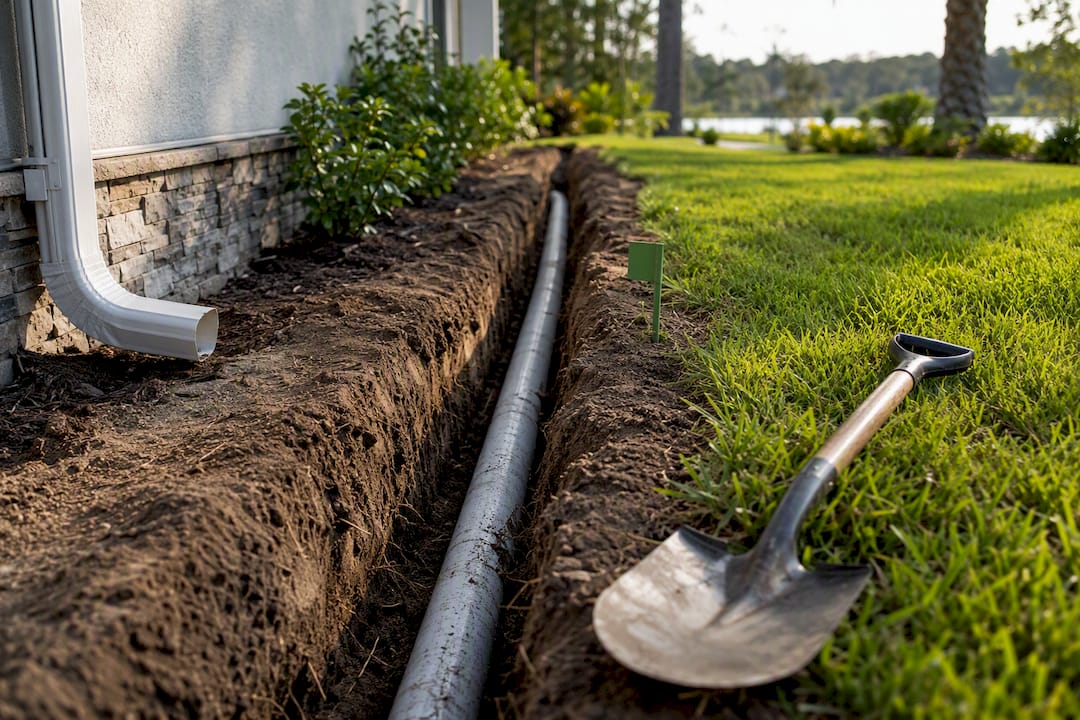
A beautiful gutter line that sends water to the wrong place is still a bad system. In Florida, downspout location matters because runoff can pool near the foundation, create soggy zones, and contribute to pest issues. Extension and discharge planning are not glamorous topics, yet they are often what separate a decent installation from one that solves a real problem.
Florida-friendly guidance consistently points homeowners toward keeping runoff on site when possible and directing it into areas that absorb water, such as lawns, beds, rain gardens, or other pervious spaces. That matters in Mount Dora yards where stormwater can move quickly over compacted surfaces or slope toward patios and entries. If a project requires rerouting water away from a walkway and toward a planted area, that adds planning. If there is no obvious absorbent area nearby, the conversation gets more complicated.
A home with one side yard and clear lawn access gives you options. A home boxed in by hardscape, decorative beds, and a screen enclosure may need more creative routing. That is a scope factor, plain and simple.
Pool cages change the drainage conversation
Anyone researching gutter drainage for pool cages has already discovered that water around outdoor living spaces is rarely a small annoyance. It turns into splashback, muddy edges, overflow near doors, or washout where foot traffic is already high. Florida properties with lanais, decks, and screened enclosures often need drainage planning that accounts for how people actually use the space.
The challenge is not just moving water off the roof. It is doing so without creating a new problem around the pool area. Roof runoff should not erode soil or spill into the zones where people walk barefoot, set furniture, or try to keep things clean after a storm. If downspouts need to avoid a cage structure or navigate around a patio layout, installation becomes more custom.
That does not mean every pool home needs an elaborate system. It means the pool area should be part of the original plan, not an afterthought. On some homes, the best route is obvious. On others, one poorly placed discharge can make the whole rear elevation feel wet and chaotic every afternoon in July.
Landscaping and soil conditions matter more than many people expect
Homeowners tend to focus on the roof and the gutters themselves. Installers who know Florida pay close attention to the ground. If runoff lands in a place that can absorb it, the whole system works better. If it lands where water races across the surface, puddles by the slab, or cuts into mulch, the gutter system may be doing its job only halfway.
That is why yard layout belongs in every planning conversation. Turf and planting beds can help absorb roof runoff. A hard-packed side yard may not. Decorative rock, edging, and dense mulch beds can react differently under repeated discharge. The point is not that one landscape style is right and another is wrong. The point is that gutters and landscape drainage are connected.
I have seen homeowners fix an overflow complaint by cleaning a downspout, and I have seen similar complaints that had nothing to do with the gutter body at all. The water was reaching the bottom just fine. The real issue was that it had nowhere useful to go once it got there. Those are very different projects, even if the symptom looked the same from the driveway.
Material and roof pairing can affect the job
Some homes call for extra care because of the roof material. Searches for gutters for metal roofs Florida come up often because homeowners want to know whether standard assumptions still apply. The safest way to think about this is not to assume a one-size-fits-all attachment method or detailing approach. Different roof assemblies can change how a contractor approaches fastening, alignment, and water control at the edge.
Without overreaching beyond the facts, it https://telegra.ph/How-Downspouts-and-Gutters-Work-Together-in-Bushnell-During-Heavy-Summer-Rain-10-18 is enough to say this: when roof type changes installation conditions, the project may require more attention to compatibility and fit. That does not automatically make it complicated, but it can move the job out of the “simple replacement” category. Anytime a contractor spends more time evaluating roof edge conditions, that should be seen as a good sign, not a delay tactic.
Color sounds cosmetic until it is not
At first glance, gutter colors for Florida homes seems like a style question. Sometimes it is. But color can also affect project complexity because exterior appearance standards may come into play. In HOA communities, associations generally have authority over exterior appearance standards, including color and style specifications for certain exterior components, though those standards must still comply with the building code and cannot be used to deny conforming installations.
For a Mount Dora homeowner, that means color choice may involve more than personal taste. If an architectural review process applies, approvals can shape timing and available finishes. Matching fascia, trim, soffit, or roof accents can also steer the final selection. Again, not a price issue on its face, but definitely a project factor.
Florida light is harsh in the best and worst ways. A color that disappears nicely on one elevation can stand out on another. The practical move is to balance neighborhood requirements, house style, and long-term satisfaction. A flashy choice may feel fun for a week and tiring after one rainy season.
Maintenance expectations should influence what you install
A gutter system is not a set-it-and-forget-it feature. Florida conditions make regular maintenance part of ownership. Leaf litter, twigs, and roof debris contribute to drainage problems, and when gutters clog, all the careful planning at the downspouts can be undone in one storm.
That is where gutter guards Mount Dora FL enters the conversation. Guards can reduce the amount of debris that enters the trough, but they are best viewed as a maintenance management decision, not a promise that you will never need service again. The more overhanging trees, the more this matters. The more difficult the roof access, the more attractive guards may seem.
This is also where homeowners wrestle with DIY gutter cleaning or hire a pro. The honest answer depends on height, roof design, stability underfoot, and how comfortable you are inspecting not just visible debris but also flow performance. A single-story home with easy access is one thing. A steep roof edge near hardscape or a pool enclosure is something else. The job is not just scooping leaves. It is checking whether water is moving correctly and whether fasteners, seams, and downspouts still perform under load.
Here is a simple way to decide when the job is moving beyond casual DIY territory:
- You cannot safely reach the problem areas without leaning, stretching, or working above surfaces that could cause a bad fall.
- Water still overflows after visible debris is removed, which suggests a slope issue, a hidden blockage, or a discharge problem.
- Sections look loose, separated, or bent, which turns cleaning into a repair assessment.
- You have a pool cage, complex roofline, or multiple stories that make access awkward and risky.
- You want the system checked as a whole, not just cleaned out once.
That same logic applies whether you are searching for gutter cleaning Dunnellon FL or looking for local help closer to Lake County. The geography changes. The judgment call does not.
Repairs can change what seemed like a basic project
Sometimes a homeowner starts out thinking they need a cleaning and learns they really need repair. Searches like gutter repair Hawthorne FL reflect a common situation across smaller Florida towns as well as larger ones. A gutter that leaks, pulls away, or dumps water in the wrong place is not always at the end of its life, but repair needs do shift the scope.
Repairs also have a way of uncovering adjacent issues. A loose section may have stayed hidden because overflowing water was blamed on leaves. A downspout may be intact but poorly directed. A trouble spot may stem from repeated runoff hitting the same patch of soil, washing it out until the lower edge becomes more vulnerable over time. That is why diagnosis matters. Quick assumptions often lead to repeat problems.
One of the more persistent gutter myths Florida homeowners deal with is the belief that if you see water moving, the system must be working. Not necessarily. Water can move and still be causing trouble. It may be overshooting a discharge area, concentrating too much in one corner, or soaking the wrong planting bed. Another myth is that a gutter project is only about the house. In reality, house, yard, and daily use of the outdoor space are all tied together.
A practical Florida checklist for year-round performance
Because Florida weather does not stick to one neat season, a year-round gutter checklist Florida homeowners can follow is usually more useful than a once-a-year routine. The goal is not to turn maintenance into a hobby. It is to catch small issues before a storm points them out the hard way.
- Check gutters and downspouts before the heaviest rainy stretches, and again after major storms.
- Watch where water exits, making sure it reaches lawn or planted areas that can absorb it rather than pooling near the foundation.
- Look for erosion, mulch washout, or splash marks near pool decks, walkways, and corners of the house.
- Clear debris buildup promptly, especially if nearby trees shed heavily.
- Reassess after any landscape change, patio addition, or exterior update that might affect drainage paths.
That checklist is short on purpose. Most drainage problems announce themselves visually if you know where to look.
The best gutter project is the one designed for your site
Mount Dora homes are not all built on the same template, and their gutter needs are not either. Some properties need straightforward roof-edge collection and clean discharge into turf. Others need careful planning around foundations, landscape beds, screen enclosures, and appearance standards. If you strip away the price talk, the project becomes easier to understand.
You are looking at water volume, roof geometry, discharge options, maintenance burden, and site use. You are also looking at how your house behaves in real Florida weather, not how it looks in a listing photo on a clear day.
That is why the smartest homeowners ask detailed, practical questions. Where will the downspouts send water? Will runoff stay on site in absorbent areas where possible? How will the plan interact with the pool area, walkways, or planting beds? If debris is a routine issue, do guards make sense here, or is periodic cleaning the better fit? If the community has exterior standards, what approvals should be handled first?
When those questions get answered well, the rest of the project usually falls into place. You may still compare styles, finishes, and maintenance options, but you will be comparing them in the context of your house, your yard, and your weather. That is the only context that really matters.